
Sealed system & compressor
Sub-Zero Sealed System & Compressor Repair
Compressor, evaporator, condenser and refrigerant faults on Sub-Zero built-ins — diagnosed with pressure and electrical evidence before any quote, fixed with genuine OEM parts across Fremont and the Tri-City.
- Evidence-based diagnosis
- $89 service call waived
- 365-day labor warranty
- Genuine OEM parts
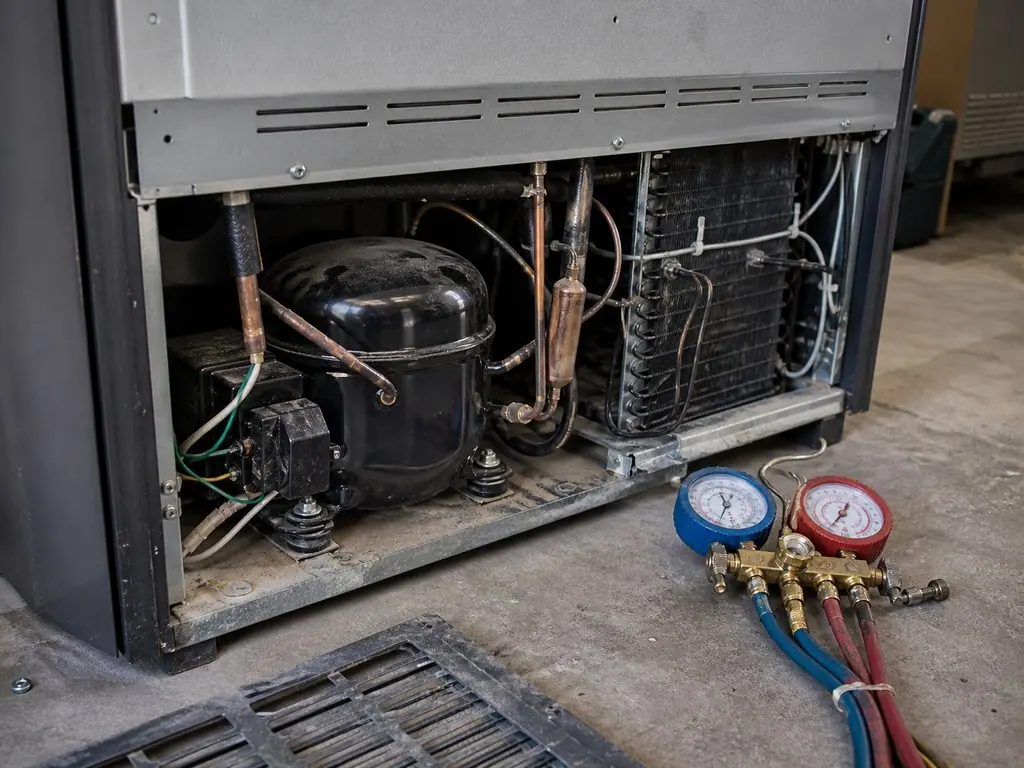
The short answer
The sealed system is the closed refrigerant loop — compressor, condenser, dryer, metering device and evaporator — that makes a Sub-Zero cold. When it fails, both compartments warm while the compressor keeps running, and the fix is high-value work, typically $1,450–$3,600. We never quote it by phone: we read suction and discharge pressures with gauges and test the compressor electrically first, so you pay for the real fault. Call (650) 668-1172.
What the sealed system actually is
The "sealed system" is the heart of any Sub-Zero — a closed, pressurized refrigeration loop that is brazed shut at the factory. Five parts do the work: the compressor pumps refrigerant around the loop; the condenser coils shed heat to the room; a dryer keeps the refrigerant clean and dry; a metering device (a capillary tube or valve) meters flow into the cold side; and the evaporator absorbs heat from inside the cabinet to make it cold. The refrigerant itself circulates endlessly through all of them.
Because the loop is sealed and charged by weight to a precise spec, it is the one area of a Sub-Zero that homeowners and general handymen must never open. When a sealed-system component fails or the refrigerant charge is lost to a leak, cooling falls across the whole unit — and the fix is high-value, evidence-driven work, not a parts swap.
The five parts of the loop
Compressor
Pumps refrigerant under pressure. It can run yet fail to cool if a start relay, overload or winding is bad — which is why we test it electrically before condemning it.
Evaporator
The cold coil inside the cabinet that absorbs heat. A leak or restriction here starves cooling; evaporator replacement is one of the more involved sealed-system jobs.
Condenser
Sheds the heat the compressor moves. A packed, dirty condenser overworks the whole loop and can mimic a deeper fault until it is cleaned.
Refrigerant & dryer
The circulating refrigerant and the dryer that keeps it clean. A leak drops the charge; simply "topping up" a leaking system never lasts and is not a real repair.
Metering device
A capillary tube or valve that meters refrigerant into the evaporator. A restriction here starves the cold side and shows up as abnormal pressures on the gauges.
Controls & relay
The start relay, overload and board that command the compressor. A control fault can imitate a dead compressor exactly — so electrical proof comes first.
Why diagnosis needs gauges and a meter — not a guess
From the outside, a refrigerant leak, a restricted metering device, a failed start relay and a dead compressor can look identical — both compartments warm, the compressor humming, little cold to show for it. The only way to tell them apart is evidence.
We connect manifold gauges to read the suction and discharge pressures and watch how the loop behaves under load, then test the compressor, relay and overload electrically. Abnormal pressures point to a leak, a starved evaporator or a restriction; the electrical readings tell us whether the compressor is actually finished. Only with that picture do we name the failed part and quote it — so you never pay to replace a healthy, costly compressor on a hunch.

| Symptom | Evidence we gather | Likely repair | Draft range |
|---|---|---|---|
| Both compartments slowly warm; compressor runs constantly | Low suction/discharge pressures; compressor tests good | Refrigerant leak repair, evacuate & recharge to spec | $1,450–$2,600 |
| No cooling; compressor hums then cuts out | Electrical test of relay, overload and windings | Start relay/overload, or compressor if windings fail | $350–$3,600 |
| Frost only on part of the evaporator; weak cold | Pressure pattern showing a restriction or leak at the coil | Evaporator replacement, evacuate & recharge | $1,600–$3,200 |
| Cold side starves while freezer is near normal | Pressures indicating a metering-device restriction | Metering device / dryer repair and recharge | $1,450–$2,800 |
| Runs hot and constant after cleaning | Condenser verified clean; pressures still abnormal | Deeper sealed-system diagnosis before any quote | From $1,450 |
Draft planning ranges; the firm price comes only after pressure and electrical evidence confirms the fault, model and access.
Do not attempt refrigerant work yourself
Sealed-system and refrigerant work is professional-only for good reason. Refrigerant handling is federally regulated and requires certification and recovery equipment; the loop runs under pressure and is brazed shut; and adding refrigerant to a leaking system is both unsafe and useless — the charge simply escapes again. Opening a sealed system without the right tools and training risks injury, property damage and a far costlier repair. Leave it to a qualified technician who will recover, repair, evacuate and recharge the system to spec.
How we confirm a sealed-system fault
- 1
Rule out airflow first
We log temperatures and read the frost pattern to separate an airflow or defrost fault from a true sealed-system failure.
- 2
Connect manifold gauges
We read suction and discharge pressures to see how the refrigerant loop is really behaving under load.
- 3
Test the compressor electrically
We check the start relay, overload and windings so a healthy compressor is never condemned by mistake.
- 4
Locate leaks or restrictions
Abnormal pressures point us to a refrigerant leak, a starved evaporator or a restriction in the dryer or metering device.
- 5
Quote from evidence
Only with a clear pressure and electrical picture do we name the failed part and give a firm, written price.
Repair vs. replace — the real economics
Sealed-system jobs are the most expensive Sub-Zero repairs, typically landing in the $1,450–$3,600 range. That sounds steep until you weigh it against a replacement: a comparable built-in, with delivery, installation and custom panel work, runs well into five figures. Because Sub-Zero built-ins are engineered to last decades, repairing a compressor or evaporator on an otherwise sound cabinet is frequently the smart financial call.
The honest exception is a very old unit with several aging components, where another failure may follow. We will show you the pressure and electrical evidence, the real cost, and the trade-offs so the decision is yours and grounded in facts. For a full cost picture across every job, see our repair pricing page, and our repair-or-replace guide for when a repair isn’t worth it.
$89 service call
Waived when you book the repair.
365-day labor warranty
A full year on all labor we perform.
Genuine OEM parts
Factory-certified Sub-Zero components, fitted to spec.
| Service | Draft range | Time | Note |
|---|---|---|---|
| Diagnostic / service call | $89 | 45–90 min | Model, temps, airflow and visual checks — fee waived when you book the repair. |
| Door gasket / frost-line | $400–$900 | 1–3 h | Depends on model and gasket availability. |
| Ice maker / water line | $275–$850 | 1–3 h | Inlet valve, fill tube or ice module. |
| Control board / sensor | $350–$1,250 | 1–4 h | Quoted after electrical proof of the fault. |
| Compressor / sealed system | $1,450–$3,600 | 2–6 h + parts | Requires pressure and electrical evidence before any quote. |
Draft ranges for planning; final quote depends on model, parts, access and diagnosis.
Sealed-system service across the Tri-City
We bring gauges and OEM parts to sealed-system calls throughout Fremont, Newark, Union City, Milpitas and Hayward from a single dispatch line, routing by district so a multi-step repair gets a real schedule instead of an all-day wait. If both your compartments are drifting warm, start with not cooling to narrow the symptom, or read our 600 Series guide if you have a classic built-in. New here? Our Sub-Zero refrigerator repair overview ties it all together.
Both sides warming together? That can be the sealed system — and it deserves gauges, not a guess. Book a diagnosis and the $89 service call is waived when you approve the repair.
Sealed-system repairs, reviewed
Recent compressor and sealed-system jobs across Fremont and the Tri-City.
1,184 reviews · 4.9 / 5
Older Niles house, older built-in fridge. The technician explained exactly why the fresh-food side was warm while the freezer stayed cold and fixed it without trying to upsell a whole new unit. The 365-day labor warranty made the decision easy.
Fresh-food compartment crept up to the low 50s while the freezer was fine. They diagnosed a failing evaporator fan and a frosted coil, defrosted it properly and replaced the fan with a genuine Sub-Zero part. Cold and quiet again the same day.
Freezer was running but not actually freezing. The technician traced it to the defrost system instead of guessing, and explained how to spot it if it ever happens again. Genuinely knowledgeable about Sub-Zero, not generic appliance guys.
Sealed system & compressor — FAQ
How much does Sub-Zero evaporator replacement or sealed-system repair cost?
Sealed-system work on a Sub-Zero typically falls in the $1,450–$3,600 range. An evaporator replacement, a compressor, a refrigerant leak repair with recharge, or a dryer and metering-device job each land in that band depending on which component failed and how the system is accessed. We give a firm number only after pressure and electrical evidence confirms the fault — never as a phone guess.
What exactly is the sealed system on a Sub-Zero?
The sealed system is the closed refrigeration loop: the compressor pumps refrigerant, the condenser sheds heat, a dryer and a metering device (capillary tube or valve) control flow, and the evaporator absorbs heat inside the cabinet to make it cold. It is brazed shut and runs under pressure. When any part of that loop fails or the refrigerant charge is lost, cooling drops across the whole unit.
How do I know if it is a sealed-system failure or just an airflow problem?
Airflow faults — a frosted evaporator, a worn fan, a stuck damper — usually leave the freezer cold while only the fresh-food side warms. A true sealed-system failure tends to warm both compartments together, with the compressor running constantly yet producing little cold, often with abnormal frost only at one spot on the evaporator. The only way to be sure is to read system pressures and check the compressor electrically.
Why can’t you quote sealed-system work over the phone?
Because a wrong diagnosis here is expensive. Symptoms that look like a dead compressor can be a start relay, a refrigerant leak, a restriction in the metering device, or even a control fault. We connect manifold gauges to read suction and discharge pressures and test the compressor electrically before quoting, so you pay for the actual failure — not a guess that throws a costly part at the problem.
Is a sealed-system repair worth it, or should I replace the unit?
It depends on the unit and the failure. Sub-Zero built-ins are engineered to last decades, so repairing a compressor or evaporator on an otherwise sound cabinet is often far cheaper than a five-figure replacement. On a very old unit with multiple aging components, replacement can win. We show you the pressure and electrical evidence and the real numbers so you decide with facts.
Can I recharge the refrigerant or fix the sealed system myself?
No. Refrigerant handling is federally regulated and requires certification, recovery equipment and brazing under pressure — done wrong it is dangerous and illegal, and simply adding refrigerant to a leaking system never lasts. A sealed loop also has to be evacuated and charged by weight to spec. This is professional-only work, which is exactly what we do.
My compressor is running constantly but the fridge is warm — is it dead?
Not necessarily. A compressor that runs but does not cool can have a failed start relay or overload, a low refrigerant charge from a leak, or a restriction starving the evaporator. We confirm with gauges and electrical tests before condemning the compressor, because replacing a healthy compressor is one of the costliest mistakes in this kind of repair.
Do you use genuine parts and warranty sealed-system work?
Yes. We fit factory-certified, genuine OEM Sub-Zero parts and our work follows Sub-Zero service specifications, including evacuating and charging the system to spec. The labor is backed by our 365-day warranty, and the $89 service call is waived when you book the repair.
How long does a sealed-system repair take?
Diagnosis is typically one visit. The repair itself — recovering refrigerant, replacing the failed component, pulling a vacuum, brazing, leak-checking and recharging by weight — is careful work and often a second scheduled visit once the correct OEM part is on hand. We give you a realistic timeline with the quote.

Sub-Zero acting up? Get a real arrival window today.
Call the Tri-City dispatch line or book online. The $89 service call is waived when you book the repair, and every job is backed by a 365-day labor warranty.