
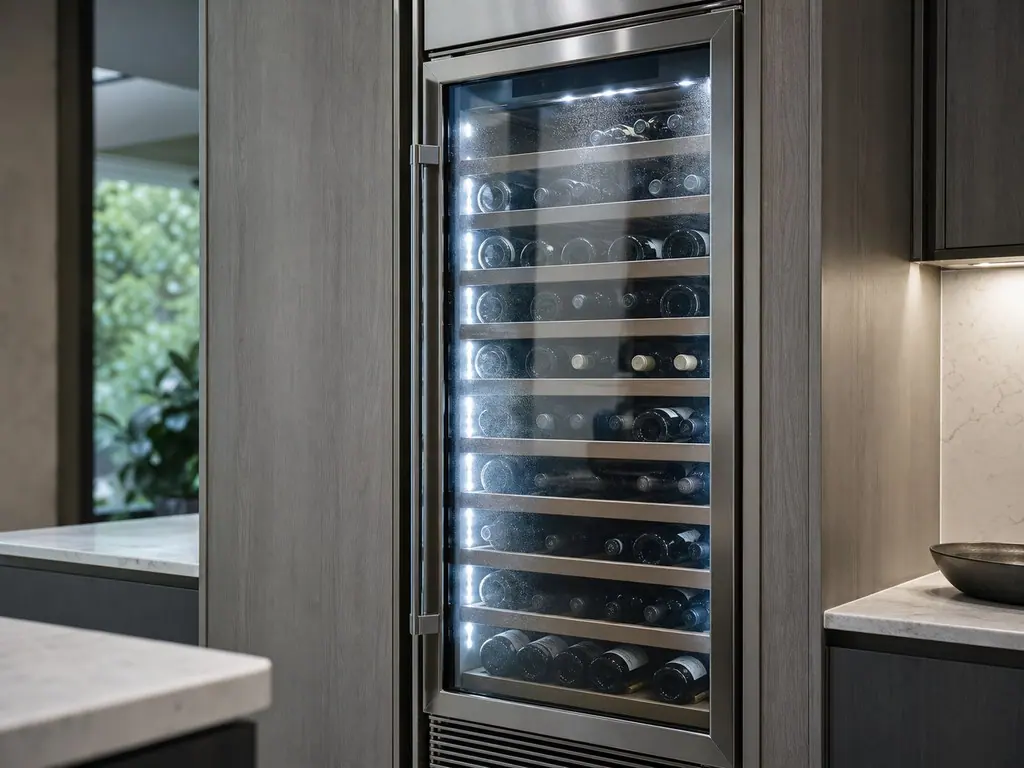
The hillside homes above Mission San Jose tend to have serious kitchens, and a Sub-Zero wine storage column is a fixture in many of them. A wine unit asks something different from a refrigerator: it has to hold a narrow, stable temperature and the right humidity for years, not just keep food cold.
Up on the Mission Peak side of Fremont, the afternoon sun and the day-to-night temperature swing make that steadiness harder to maintain than it looks — which is exactly where these columns quietly drift.
Why dual zones drift first
Most Sub-Zero wine columns run two independent zones so reds and whites can hold different temperatures. Each zone has its own sensor and damper, and the dual-zone models are the ones we most often see drift, because there is simply more to keep calibrated. A zone that creeps a few degrees warm will not spoil a bottle overnight, but held over months it ages a collection faster than the owner intends.
Sun, humidity and a hillside kitchen
A wine column set on a wall that catches the Mission San Jose afternoon sun works harder all summer, and the harder it works the sooner the condenser loads up with dust. Humidity matters too: too dry and corks shrink, too damp and labels suffer. Sub-Zero wine units manage humidity actively, but only while the seals are sound and the system is clean — both of which a hillside kitchen tests.
What keeps a wine column honest
An annual condenser cleaning and a seal check are the core of it, the same as a refrigerator, plus a calibration check on each zone against a known thermometer. If a zone has drifted we verify the sensor and damper before assuming the worst — it is rarely the sealed system. We use genuine OEM parts, the $89 service call is waived with the repair, and the work carries a 365-day labor warranty.
One note: Sub-Zero builds the wine and refrigeration side of the house. Its sister brand Wolf makes cooking equipment, so a wine column is always a Sub-Zero conversation, never a Wolf one.